How to detect a hidden water leak in your home
A hidden water leak rarely announces itself. Learn the meter test, slab leak signs, and when to call a New Braunfels leak detection pro before damage spreads.
You can detect a hidden water leak in your home by shutting off every fixture, watching your water meter for 15 minutes, and checking for warm floor spots, musty smells, or a water bill that jumped more than 20 percent month over month. If the meter's low-flow dial moves with nothing running, you have a leak somewhere between the meter and your fixtures. The rest of this guide walks through the exact tests we run, the signs New Braunfels homeowners miss, and how to tell a slab leak from a toilet flapper that is quietly wasting 200 gallons a day.
Detect hidden water leak New Braunfels TX is not a job you want to guess at. Water finds the path of least resistance, and by the time you see a stain on the ceiling or a buckle in the laminate, the damage has usually been running for weeks. We have pulled baseboards in New Braunfels homes where the drywall looked fine and the studs behind it were black. The earlier you catch it, the cheaper the fix.
What a hidden water leak actually is
A hidden water leak is a plumbing failure that occurs out of sight - inside a wall cavity, under a slab foundation, beneath a cabinet, or in the yard between the meter and the house - where water escapes without pooling somewhere you can see it. That is the whole problem. A dripping faucet is annoying but obvious. A pinhole in a copper line inside a wall can run for a month before the paint bubbles.
In New Braunfels, three locations account for most of the hidden leaks we find: under the slab, inside the walls behind showers and kitchen sinks, and in the service line running from the city meter to the house. Each one behaves differently. Each one costs differently to fix. And each one gives you a slightly different set of clues before it gets bad.
If you want a plumber who already knows the layout of these homes, our team handles plumbing New Braunfels TX calls every week and can usually narrow down the leak location on the first visit.
How do I detect a hidden water leak in my New Braunfels home?
Start with the meter test. It is free, it takes 20 minutes, and it tells you whether the leak is real before you spend a dime on anything else.
- Shut off every water-using appliance and fixture. That means the washing machine, dishwasher, ice maker, water softener, irrigation system, and every faucet and toilet in the house.
- Find your water meter. In New Braunfels it is usually in a concrete or plastic box near the curb, sometimes under a round lid marked "water."
- Watch the low-flow indicator. Most meters have a small triangle or red dial that spins when even a trickle of water moves through. If it is spinning with everything off, water is leaving the system.
- Wait 15 minutes and check again. A toilet flapper that seals and then leaks will sometimes show up only after the tank refills. If the dial is still moving after 15 minutes, you have a confirmed leak.
- Read the numbers. Write down the meter reading, wait two hours with nothing running, and read it again. One cubic foot equals 7.48 gallons. If you lost 2 cubic feet in two hours, that is roughly 15 gallons - about 180 gallons a day.
If the meter test is clean but you still smell damp air or see a stain, the leak may be on the drain side or in a line that only pressurizes when a specific fixture runs. That is when a trained ear and a thermal camera earn their keep.
Signs of a hidden water leak New Braunfels homeowners should not ignore
The signs of a water leak in Texas homes tend to show up in clusters. One clue alone might be nothing. Two or three together usually means water is moving where it should not.
- Water bill spike. A jump of 20 percent or more with no change in habits is the single most reliable early signal. New Braunfels water rates are tiered, so a small leak can push you into a higher bracket and make the bill look worse than the leak itself.
- Warm spots on the floor. If a tile or section of slab feels warm underfoot, a hot-water line under the slab is leaking. This is one of the clearest slab leak signs and it is easy to confirm with a bare foot.
- Musty smell in one room. A closed-up bedroom or hallway that smells like a wet basement usually has moisture trapped in the wall or carpet pad.
- Sound of running water when everything is off. Put your ear to the floor near the bathroom or kitchen. A hiss or steady trickle that stops when you shut off the main is a pressure-side leak.
- Hairline cracks in tile or drywall. Slab movement from saturated soil can crack grout lines and pop drywall seams. Not every crack means a leak, but new cracks plus a high bill usually do.
- Green patch in the yard. A stripe of grass that stays green through a dry spell, or a soggy spot near the meter box, points to a service line leak.
- Low water pressure at one fixture. A leak on a branch line can starve the fixtures downstream of it.
If you are seeing two or more of these, stop running water and call for leak detection before you schedule anything else. Water damage repair costs far more than the leak fix.
Why New Braunfels homes get hidden leaks
New Braunfels sits on a mix of clay, limestone, and caliche. That soil expands when it is wet and shrinks when it dries, and it does both aggressively. A slab that was poured level in 1998 can be under different stress today, and the pipes running through it move with it.
Our water is also hard. Calcium and magnesium build up inside copper and galvanized lines, and where the buildup is worst, the pipe wall thins. A pinhole leak in a 20-year-old copper line is not bad luck - it is chemistry plus time. Homes built in the 1980s and 1990s with original copper are the ones we see most often for hidden leak repair New Braunfels Texas calls.
Freeze events matter too. When a hard freeze rolls through, exposed pipes in the attic, garage, and exterior walls can split. The split may not leak until the line thaws and pressure returns, which is why we get a wave of hidden leak calls two or three days after a cold snap. If you have ever had a pipe freeze, it is worth having the line inspected before the next winter.
For homes with recurring leaks on the same run of pipe, we often recommend pipe repair New Braunfels TX rather than patching the same spot a third time. At some point the pipe is telling you it is done.
Slab leak detection New Braunfels TX: what the pros do differently
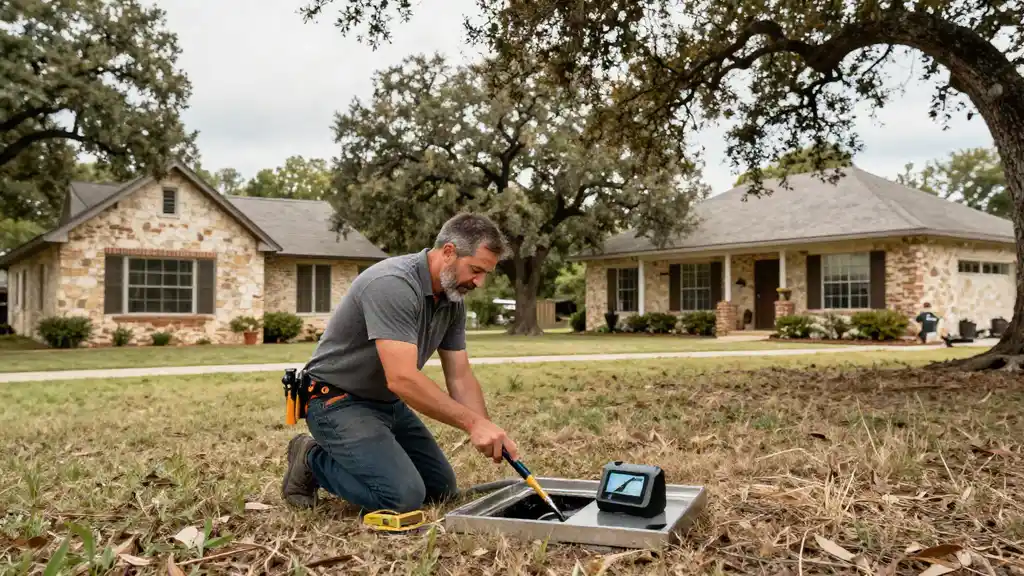
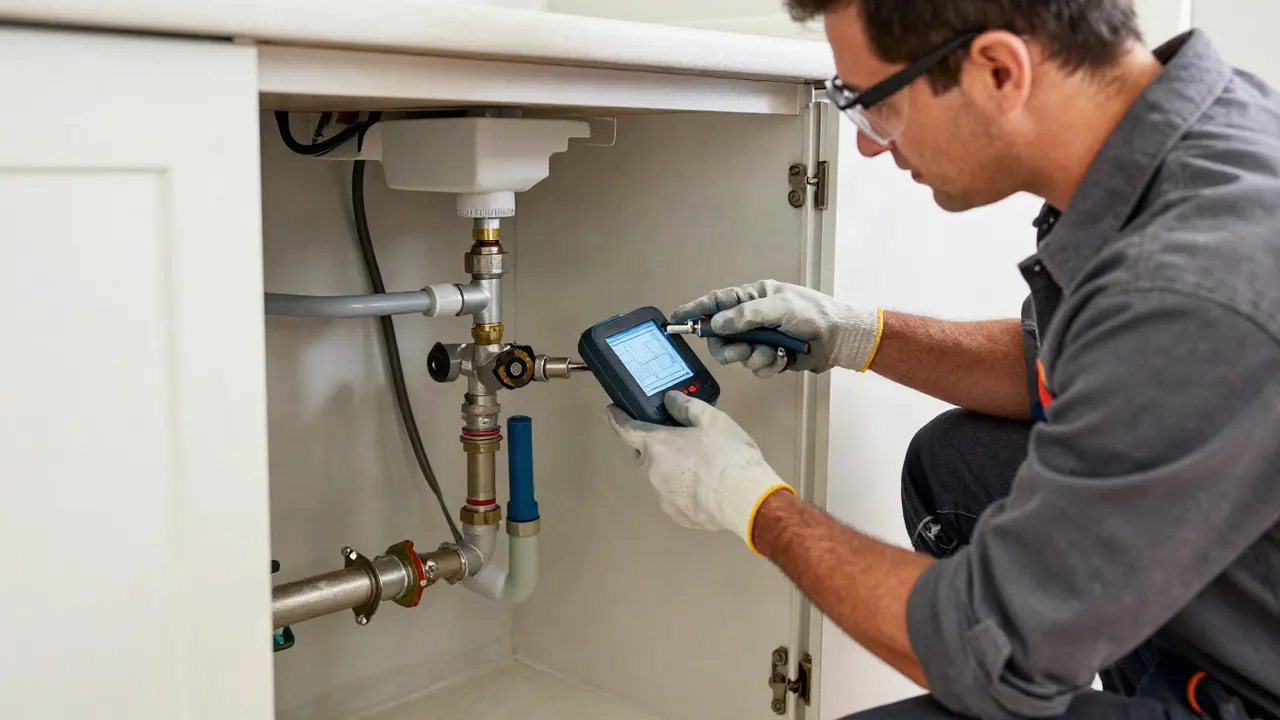
Slab leak detection New Braunfels is part listening, part instrumentation, and part knowing where builders ran the lines. We do not start by breaking concrete. We start by narrowing the leak to a 12-inch zone.
Here is what a proper leak detection visit looks like:
- Acoustic listening. A ground microphone picks up the frequency of water escaping under pressure. Copper lines under a slab make a distinct hiss that a trained ear can separate from ambient noise.
- Thermal imaging. An infrared camera shows temperature differences on the floor surface. A hot-water slab leak shows up as a warm plume; a cold-water leak shows as a cool one.
- Pressure isolation. We isolate the hot and cold sides of the system and pressurize each one separately. That tells us which line is leaking before we ever mark the floor.
- Electronic leak location. For lines under tile or thick slab, we use a correlator that compares sound signatures at two points and calculates the leak's position between them.
A typical slab leak detection in New Braunfels runs $250 to $600 in 2026, depending on how many lines we have to isolate and whether the leak is under finished flooring. Once we know the location, we can talk through repair options - spot repair, reroute through the attic, or full repiping - with real numbers instead of guesses.
If the leak turns out to be in the main line under the yard rather than the slab, we handle that with sewer line services New Braunfels TX and camera inspection so you can see the problem on screen before we dig.
Common mistakes when you suspect a hidden leak
The most expensive mistake is waiting. A hidden leak that runs for a month can rot subfloor, warp cabinets, and grow mold that costs more to remediate than the plumbing repair ever would have.
Other mistakes we see:
- Assuming it is the toilet. A running toilet is the most common cause of a high water bill, but if you have already replaced the flapper and the bill is still high, the leak is somewhere else.
- Turning the main off and calling it fixed. Shutting off the water stops the damage but does not find the leak. You still need a diagnosis.
- Breaking into the slab first. We have seen homeowners jackhammer a bathroom floor and miss the leak by three feet. Locate first, then open.
- Ignoring a warm floor. A warm spot is not a heating issue in a New Braunfels home. It is almost always a hot-water slab leak.
- Using a handyman for a pressure test. Leak detection requires calibrated equipment and experience reading it. A general handyman can patch drywall; he cannot isolate a slab leak.
- Not documenting the meter reading. Your water utility may adjust a bill for a confirmed leak, but only if you have readings and a plumber's report. Take photos of the meter before and after.
When to call a professional
Call a professional the moment the meter test confirms water is moving with everything off, or when you have two or more of the signs above. That is not a wait-and-see situation.
At Comal Crest Plumbing, we run leak detection with acoustic and thermal equipment, isolate the line, and give you a written location before any repair starts. We handle everything from a pinhole in a wall to a full slab leak, and we can usually get to a New Braunfels home the same day you call. If the leak is under the slab, we will walk you through spot repair versus reroute versus repiping so you can pick the option that fits your house and your budget.
If you are not sure whether it is a leak or just a high bill, call us anyway. The diagnostic is cheaper than the damage.
Frequently Asked Questions
How do I detect a hidden water leak in my New Braunfels home?
Shut off all fixtures and appliances, then watch the low-flow dial on your water meter for 15 minutes. If it moves, you have a leak. Note the meter reading, wait two hours, and re-read it - 1 cubic foot equals 7.48 gallons. A loss of 2 cubic feet in two hours is about 180 gallons a day.
What are signs of a water leak in Texas?
The most common signs in Texas homes are a water bill jump of 20 percent or more, warm spots on a slab floor, a musty smell in one room, the sound of running water when everything is off, and a green or soggy patch in the yard. Two or more together usually mean a confirmed leak.
Who finds hidden water leaks in New Braunfels TX?
A licensed plumbing company with acoustic and thermal leak detection equipment. Comal Crest Plumbing locates hidden leaks in walls, under slabs, and in service lines across New Braunfels and gives you the leak location before any repair work begins.
Can a plumber detect a slab leak near me?
Yes. Slab leak detection uses acoustic listening, thermal imaging, and pressure isolation to pinpoint the leak within about 12 inches before any concrete is opened. A typical detection visit in New Braunfels runs $250 to $600 in 2026, depending on access and how many lines need isolating.
How much does hidden leak repair cost in New Braunfels?
Spot repairs on an accessible line usually run $400 to $1,200. Slab leak repairs range from $1,500 to $4,500 depending on whether we tunnel, reroute through the attic, or open the floor. Full repiping is a larger project but often makes sense when a home has had three or more leaks.
Get help with plumbing in New Braunfels
If your meter is spinning and nothing is running, we can find the leak and fix it before it costs you a floor. Call Comal Crest Plumbing at (737) 707-1110 and we will get a technician out to your New Braunfels home.